
5 Questions to Ask Before Choosing an Inspection Partner
When facility managers evaluate inspection vendors, the conversation usually starts with price and technology. "How much per asset? What inspection technology do you use?"
These aren't bad questions. But they're not the questions that predict long-term value.
After years of working with asset owners across industries, I've identified five questions that separate vendors who deliver reports from partners who deliver intelligence.
1. "How do you track defects over time?"
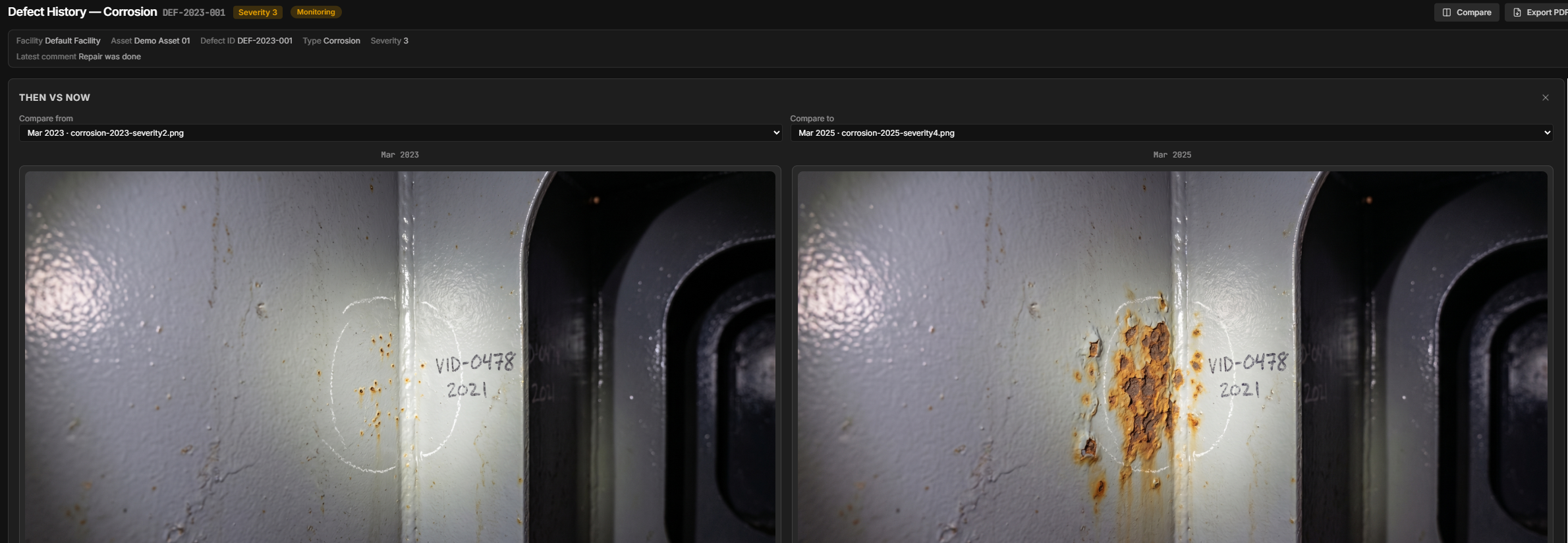
Why it matters: A single inspection is a snapshot. The real value comes from understanding how defects evolve—whether that crack is stable or growing, whether that corrosion is accelerating.
Red flag answer: "We send you a PDF report after each inspection."
Green flag answer: "Each defect receives a persistent ID. When we re-inspect, we automatically link new observations to existing defects, showing progression over time."
The difference is fundamental. With PDFs, you're starting from scratch each time. With persistent tracking, you're building a living history of your asset's health.
2. "Can I access historical data from previous inspections?"
Why it matters: Inspection data should be an asset, not a liability. If your historical data is scattered across email attachments and SharePoint folders, it's effectively lost.
Red flag answer: "We archive everything and can retrieve it if you submit a request."
Green flag answer: "All data lives in a platform you can access anytime. Any authorized user can pull up the full inspection history for any asset in seconds."
This isn't just about convenience. During audits, incident investigations, or maintenance planning, rapid access to historical data is often critical.
3. "Who owns the data?"
Why it matters: Your assets, your data. This seems obvious—but it's not always reflected in contracts.
Red flag answer: Vague language about "jointly owned intellectual property" or restrictions on data export.
Green flag answer: "You own your data completely. You can export it in standard formats at any time, and it remains yours even if you switch providers."
Data portability protects you from vendor lock-in. If you can't take your inspection history with you, you're not a customer—you're a captive.
4. "How do your reports integrate with our maintenance system?"
Why it matters: Inspection findings should trigger action. If findings live in a separate system from your maintenance workflow, they create friction—and friction leads to delays.
Red flag answer: "We deliver PDF reports that your team can use to create work orders."
Green flag answer: "Our platform integrates with [your CMMS]. Defects above a defined severity threshold automatically generate draft work orders."
The goal isn't just finding problems. It's ensuring problems get fixed before they become failures.
5. "What happens if we want to switch providers?"
Why it matters: Business relationships change. Your inspection partner might be acquired, might raise prices, or might fail to keep pace with your needs. What then?
Red flag answer: Proprietary formats, unclear data retention policies, or export fees.
Green flag answer: "We export your complete dataset in standard formats (JSON, CSV, GeoJSON). We'll provide a transition package including all imagery, annotations, and metadata."
This question reveals a vendor's confidence in their own value. Partners who deliver genuine value don't need lock-in to retain customers.
The Underlying Question
All five of these questions point to the same underlying issue:
Is this vendor selling you a service, or helping you build an asset?
Inspection reports are deliverables. They have a moment of usefulness and then depreciate rapidly.
Structured, connected inspection data is an asset. It appreciates over time as you build history, establish baselines, and enable predictive analytics.
The vendors worth partnering with understand this distinction—and price accordingly. You're not paying for drone flights. You're investing in the ongoing intelligence that those flights generate.
What We Believe at Viscendia
Our platform, Viden, was built specifically around these principles:
- Persistent defect tracking from day one
- Full data ownership with unrestricted export
- API integrations with major CMMS platforms
- Transparent transition support if you ever choose to leave
We'd rather win customers through value than retain them through lock-in. That philosophy shapes everything we build.
Michael Elmegaard is the Founder and CEO of Viscendia, helping asset owners transform inspection data into strategic intelligence.
Want to see this in action?
Learn how Viscendia can help you apply proper inspection techniques to digital thread solutions.
Book a Demo